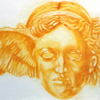

Palimpsest, Echoes and Inscriptions
Palimpsest, Echoes and Inscriptions
A palimpsest is a manuscript page that has been scraped clean and written over, but where traces of the old writing remain¹.
Echoes” are the memories we carry of others; “Inscriptions” are the memories others have carved of us.
We have our memories of other people, of time and events. Those whom we remember have their own memories of ourselves, of our interactions with one another.
This is a concise way to describe the interconnected nature of human existence and identity.
It describes the idea that the self is not a solitary, isolated entity, but a relational and co-constructed phenomenon.
1. You Are a Collection of “Them” in Your Mind
Your memories of other people, their words, their actions, the way they made you feel, have actively shaped who you are. Your values, your fears, your sense of humour, and your understanding of love have all been forged in the crucible of your interactions with others. In a very real sense, fragments of these people live on within you, influencing your thoughts and decisions.
2. “You” Exist in the Minds of Others
Just as you carry versions of others, you are a character in the life stories of everyone you’ve interacted with. The “you” that your friend remembers, the “you” that a family member holds in their heart, and the “you” that a former colleague thinks of, these are all slightly different people. Your identity is therefore distributed across the minds of your entire social network. There is no single, “true” you, but a constellation of “you” variants reflected in others.
3. Reality is a Tapestry of Perspectives
An event you both shared is not a single, objective recording. It is multiple, subjective experiences.
- Your memory of a conversation is from your perspective, with your interpretations and feelings.
- Their memory of the same conversation is from their perspective, with their own history and biases.
Neither is the “correct” version. The “truth” of the event exists somewhere in the interplay between these two, or more, perspectives.
4. This Creates a Deep Interdependence
This mutual memory-holding creates an invisible web of connection. It means:
- We are responsible for our impact: The memories we create in others become a part of their psychological landscape. A kind word can be a source of strength for them years later, while a harsh one can become a curse.
- We are vulnerable: Our own sense of self is, in part, held in the custody of others. A forgotten friendship, a distorted memory someone holds of us, or the loss of a loved one who held key parts of our shared history can feel like a loss of a part of ourselves.
- We are immortal in a way: As long as someone remembers us, a part of us continues to exist². This is the fundamental idea behind legacy and the pain of being forgotten.
In Summary:
The simple statement, “I have my memories of other people… Those who I remember have their memories of myself,” captures the essence of a shared humanity.
We are not just individuals who have relationships; we are individuals formed by and existing within those relationships. You are a story that you tell yourself, but you are also a character in the stories of countless others. Our lives are a beautiful, complex, and ongoing act of co-creation.
Footnotes
¹ This is a metaphor for the self: we are a layered record of all the “inscriptions” and “echoes” of others, with older memories faintly visible beneath the new. See https://www.britannica.com/topic/palimpsest-manuscript
² This is an Ancient Egyptian belief. While people remember you and speak your name you continue to live.