Punishment of Prometheus, and the Eagle of Zeus
Punishment of Prometheus
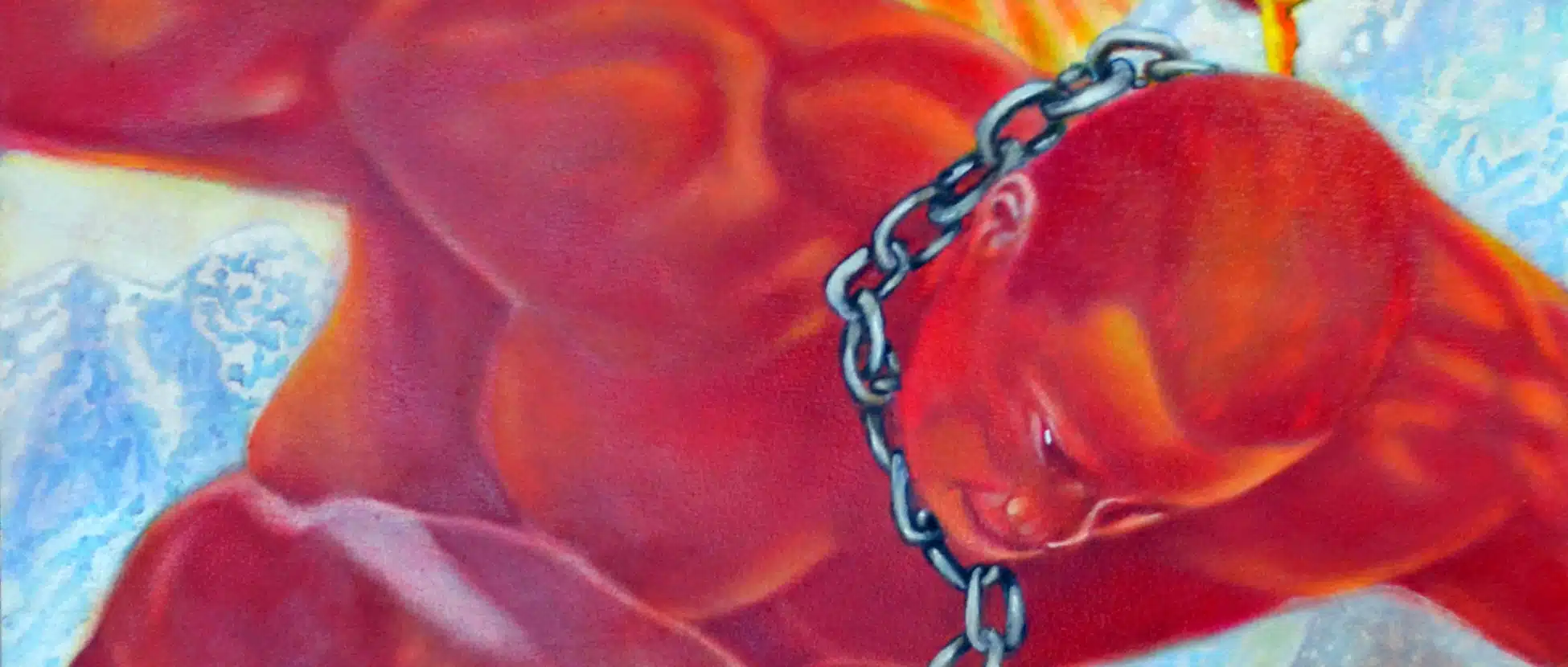
Punishment of Prometheus, by the Eagle of Zeus, from Ancient Greek mythology. This painting highlights the intense conflict between the Titan Prometheus and Zeus.
Oil on wood, 48 x 24 inches, 2022
Awarded Best in Show at Paganicon 2026 art exhibition.

Prometheus and the Eagle of Zeus
Renowned for his intelligence, Prometheus defied Zeus by stealing fire from the gods and bestowing it upon humanity. Prometheus thus sparked progress and civilisation. This act of defiance against Zeus, the omnipotent ruler of the gods, provoked severe retribution. Zeus punished Prometheus for his transgression by binding him to a rock. An eagle, often considered Zeus’s eagle, sometimes identified as the Caucasian Eagle, devoured his liver daily. According to Greek mythology, the liver regenerated overnight, ensuring that Prometheus’s suffering remained perpetual and cyclic, with the torment renewing daily.
Prometheus’s act of rebellion wasn’t merely a theft but one imbued with deeper symbolism and consequence. By giving fire to humanity, Prometheus gifted them not just warmth and the means to cook food, but also the groundwork for technological advancement and cultural development. Fire became a symbol of enlightenment, ingenuity, and the spark of civilisation itself. Prometheus’s gift challenged the dominance of the gods and elevated humans from a rudimentary state to one capable of reason and innovation. This transformative endowment fundamentally altered the trajectory of human evolution, heralding an era where humans could survive and thrive through creativity and intellect.
Psychological Symbolism
Prometheus’s narrative is rich with psychological symbolism, deeply interwoven with human themes of defiance, suffering, enlightenment, and the quest for knowledge. The myth operates on several layers, offering multiple interpretations from a psychological perspective.
1. Rebellion and Defiance: Psychologically, Prometheus embodies the archetype of the rebellious hero, the individual who challenges authoritarian structures, Zeus, in pursuit of a greater good. This defiance can be seen as a metaphor for human striving against oppressive forces, whether they be societal, familial, or internal psychological constraints. The act of defiance is crucial in the individuation process, where one must often rebel against the status quo to achieve personal growth and self-realisation.
2. Sacrifice and Suffering: Prometheus’s eternal punishment reflects the inherent suffering that often accompanies the pursuit of knowledge and progress. His continuously regenerating liver, which is perpetually devoured, symbolises the repetitive nature of human suffering and the relentless pursuit of enlightenment despite frequent setbacks. It suggests that profound growth and innovation often come at high personal costs.
3. Fire as Enlightenment: The fire Prometheus steals and gives to humanity symbolises enlightenment, knowledge, and the spark of creativity. Psychologically, fire represents the light of consciousness that illuminates
Original oil painting and prints available from Saatchi Art