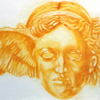

Sabbat, Dark Interpreter
Sabbat, Dark Interpreter, De Quincy Dreams of Levana and Our Ladies of Sorrow
Sabbat or Dark Interpreter, inspired by Thomas De Quincy’s Confessions of an English Opium Eater, is oil on wood, 48 inches by 48 inches, 2016.
Purchase the original painting of Sabbat from Saatchi Art

Since the Middle Ages, until comparatively recently, a conjecture of public opinion held the view that visits of witches and warlocks to the Sabbat were a physical experience.
In recent times, this view has, by many, been transformed into a concept that attendance at the Sabbat is induced by hallucinogenic substances, ingredients often absorbed through the skin from the well-known “flying ointment”.
See Sacred Mushroom and the Cross by John M. Allegro for an illustration of this phenomenon in Christian religious experience.
The De Quincy connection provides another example of altered state religious experience induced by a mind-altering substance, leading to derangement of the senses.
Thomas De Quincy’s book, Confessions of an English Opium Eater, is a detailed account of the day-to-day life of an early 19th-century laudanum addict written in chronological style.
However, in the chapter Levana and our Ladies of Sorrow we find a dramatic textual shift into a gnomic style that attempts to depict an alien phantasmagoric world.
For DeQuincy, his soul guide into this realm is the Dark Interpreter, a symbolic representation of the substance of psychedelic revelations.
In this world individuality is flayed away exposing raw primal soul integrated into the infinite.
See
Roger Williamson Artist Statement